Designing for Human Judgment in Inventory Planning
Company: IBM
Timeline: 6 weeks
Date: September - October, 2024
Industry: Supply Chain
Background
What is inventory segmentation and allocation?
At its core, inventory segmentation and allocation is about deciding who gets what stock, when, and why — especially when there isn’t enough to go around.
This project focused on understanding how inventory and fulfilment teams actually make these decisions in practice. The goal was to ground product decisions in real decision-making behaviour, not assumptions about how allocation should work.
Prioritising the Problem
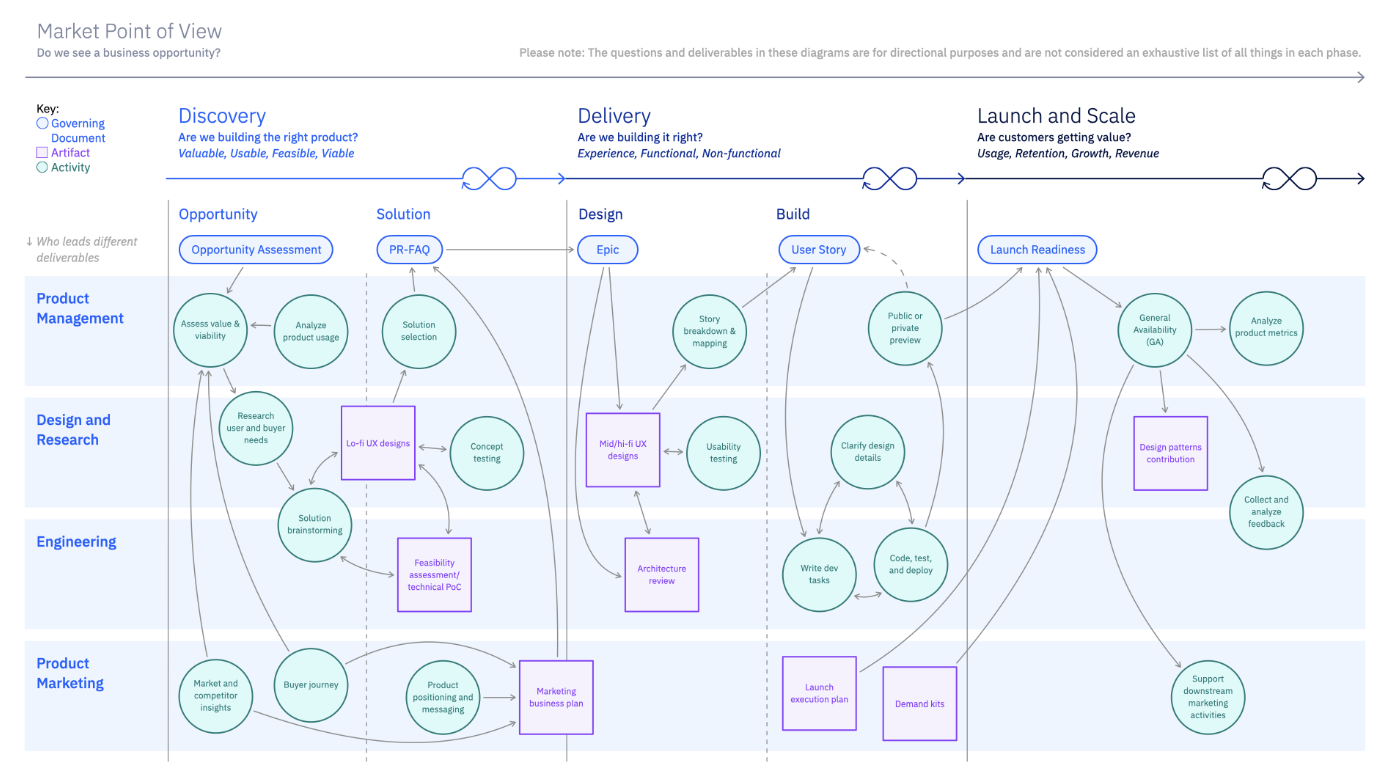
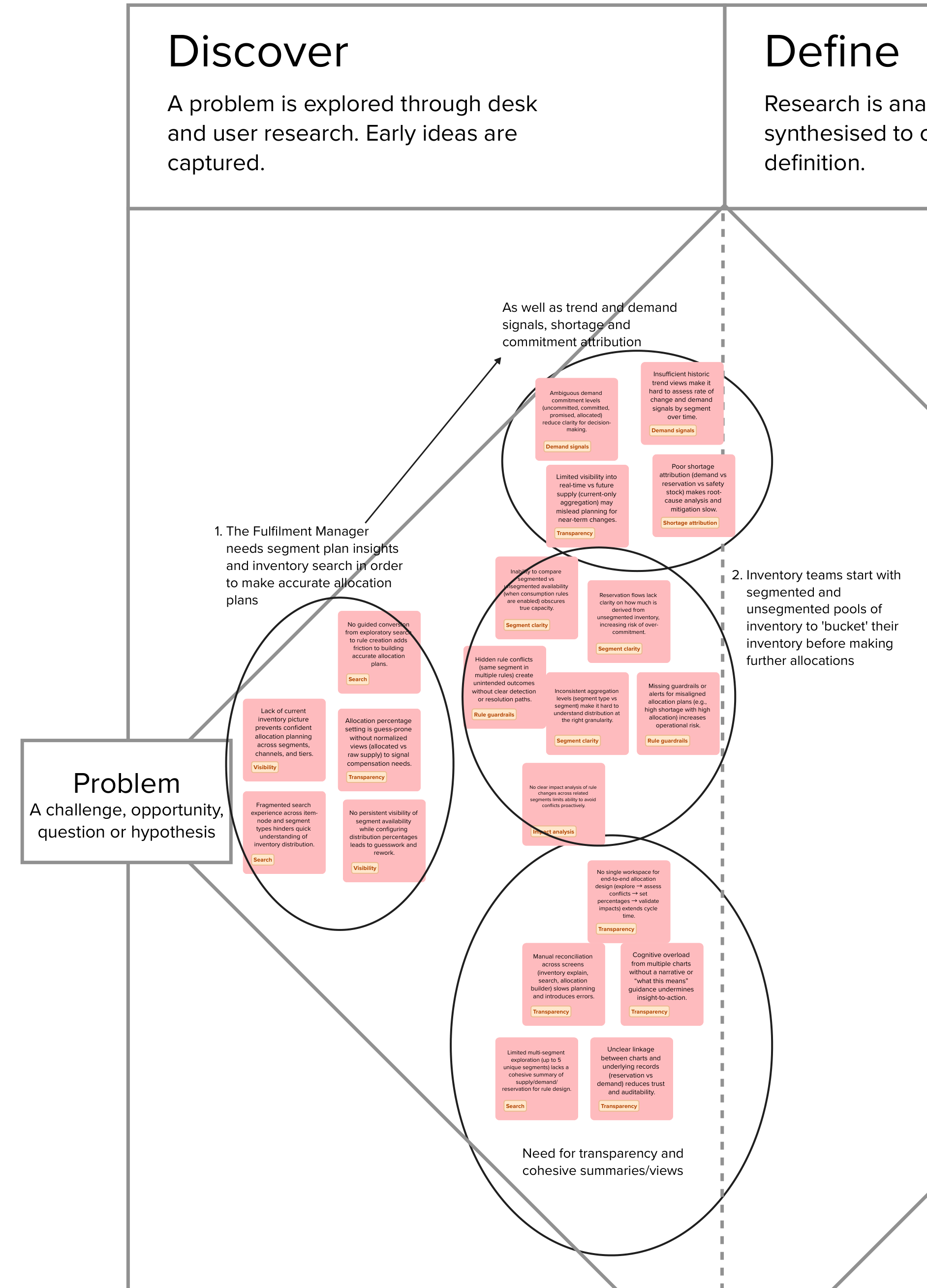
After discussing the master epic requirements with the product manager, I leveraged the double diamond design thinking approach to outline the scope of the proposed user problems. This exercise identified key assumptions to challenge with user research in order to prioritise the problem before entering the concept stage of the PDLC.
Key assumptions:
The Fulfilment Manager needs segment plan insights and inventory search in order to make accurate allocation plans
Inventory teams start with segmented and unsegmented pools of inventory to 'bucket' their inventory before making further allocations
The Fulfilment Manager is the primary persona segmenting inventory, creating allocation plans and updating consumption rules in order to make better allocation decisions
Project Overview
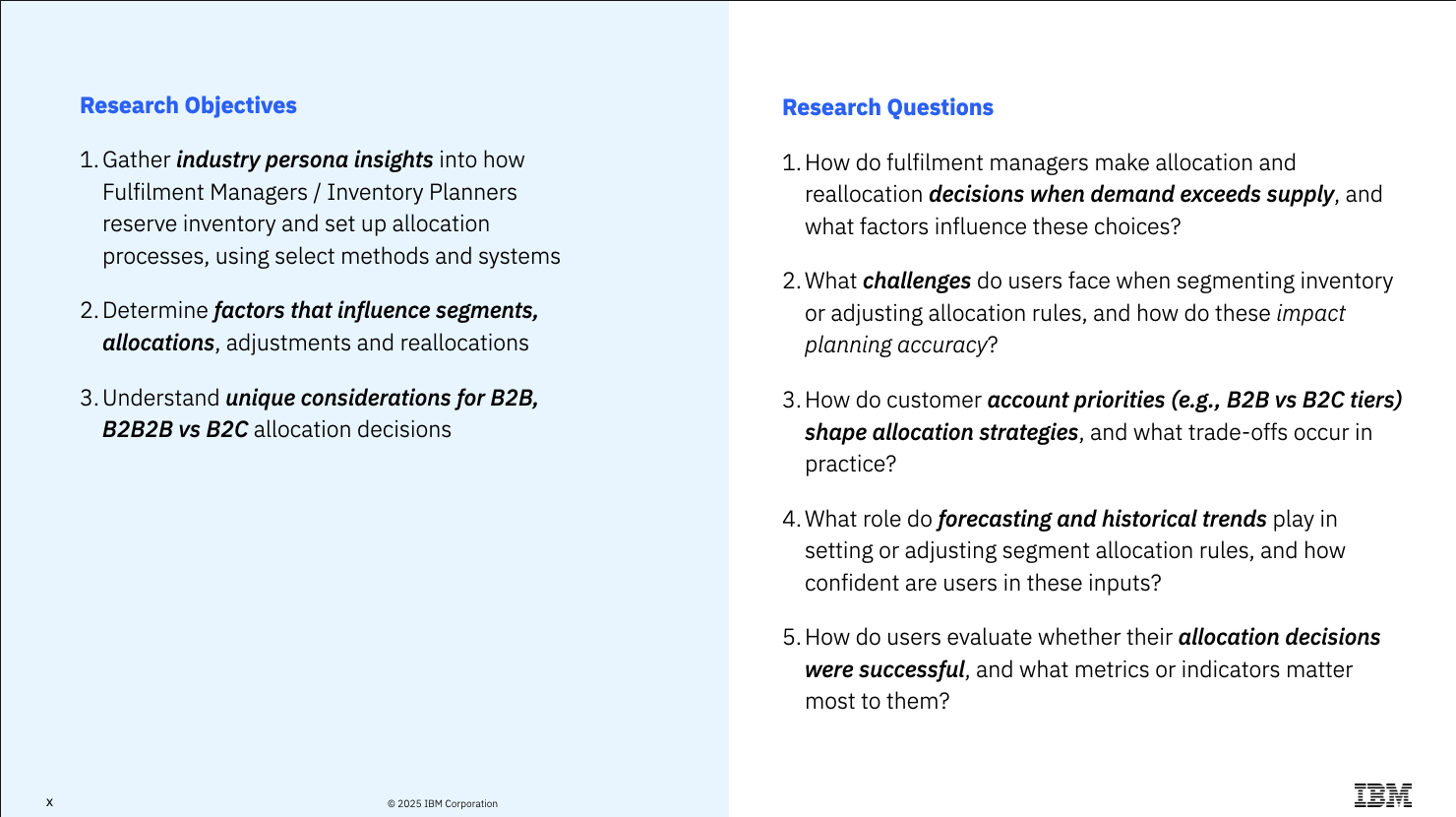
This project set out to understand how fulfilment managers and inventory planners make allocation decisions across different segments, channels, and account priorities—and what truly influences adjustments and reallocations when demand exceeds supply.
The research revealed that the biggest pain points weren’t in initial allocations but in reallocations, where users lacked timely insight, confidence in forecasts, and clarity on trade‑offs across B2B, B2B2B, and B2C contexts.
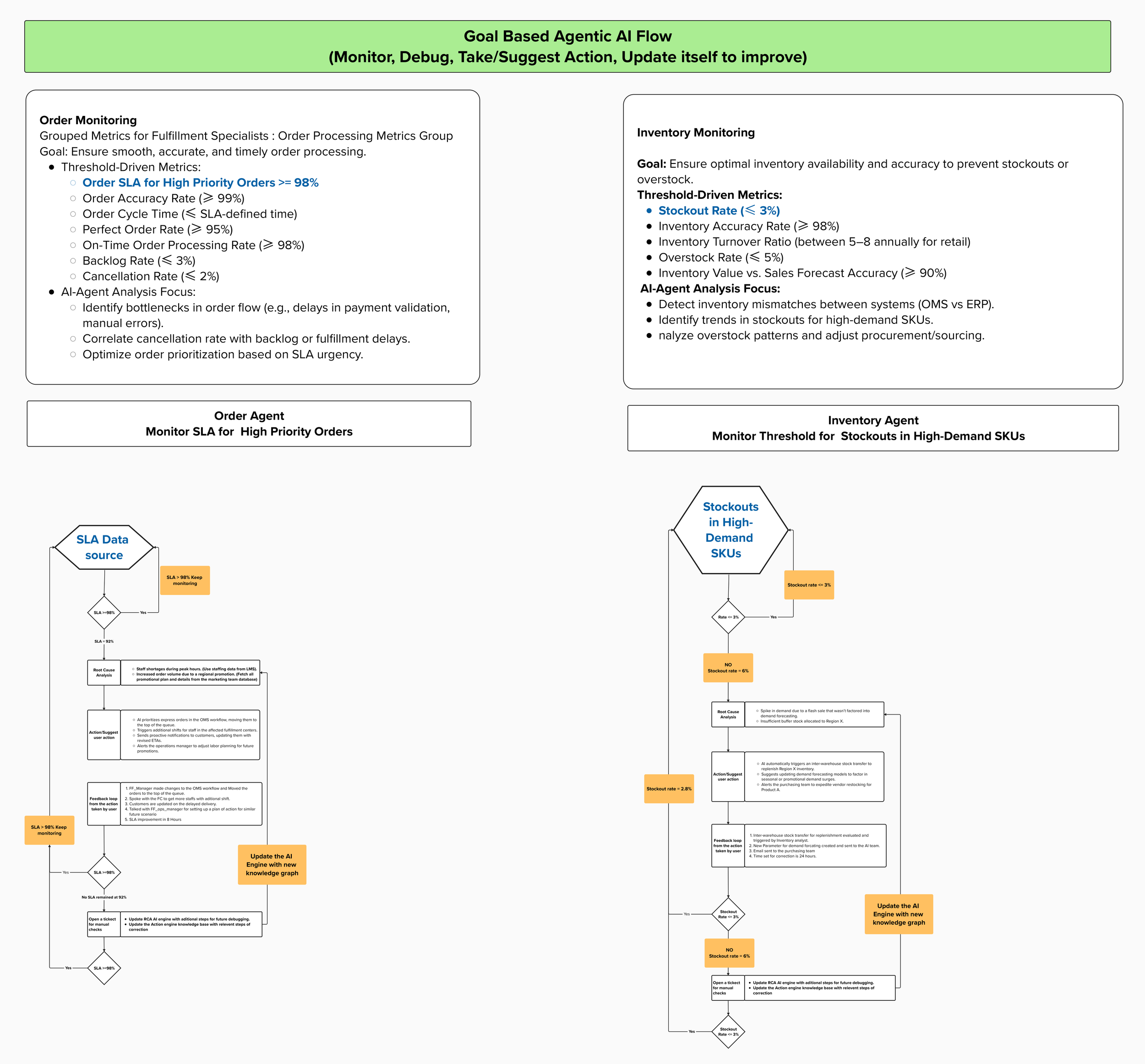
These findings prompted a pivot in product direction toward AI‑assisted reallocation use cases, enabling an Inventory Agent that can interpret segment rules, surface risks, and recommend or execute context‑aware reallocations. This shifted the focus from monitoring problems to supporting smarter, evidence‑based decisions when it matters most.
Discovery research
In the discovery phase of the product development lifecycle, the product team planned to develop a solution strategy based on the following user story, which was informed by product management's customer and industry research:
As a fulfilment manager, I need a series of charts and metrics data to help me realise the details of the segment inventory by allocation and consumption rules so that I can leverage the data to help be create better allocation plan as well as insight to the current segmented inventory level.
Research Overview
Method
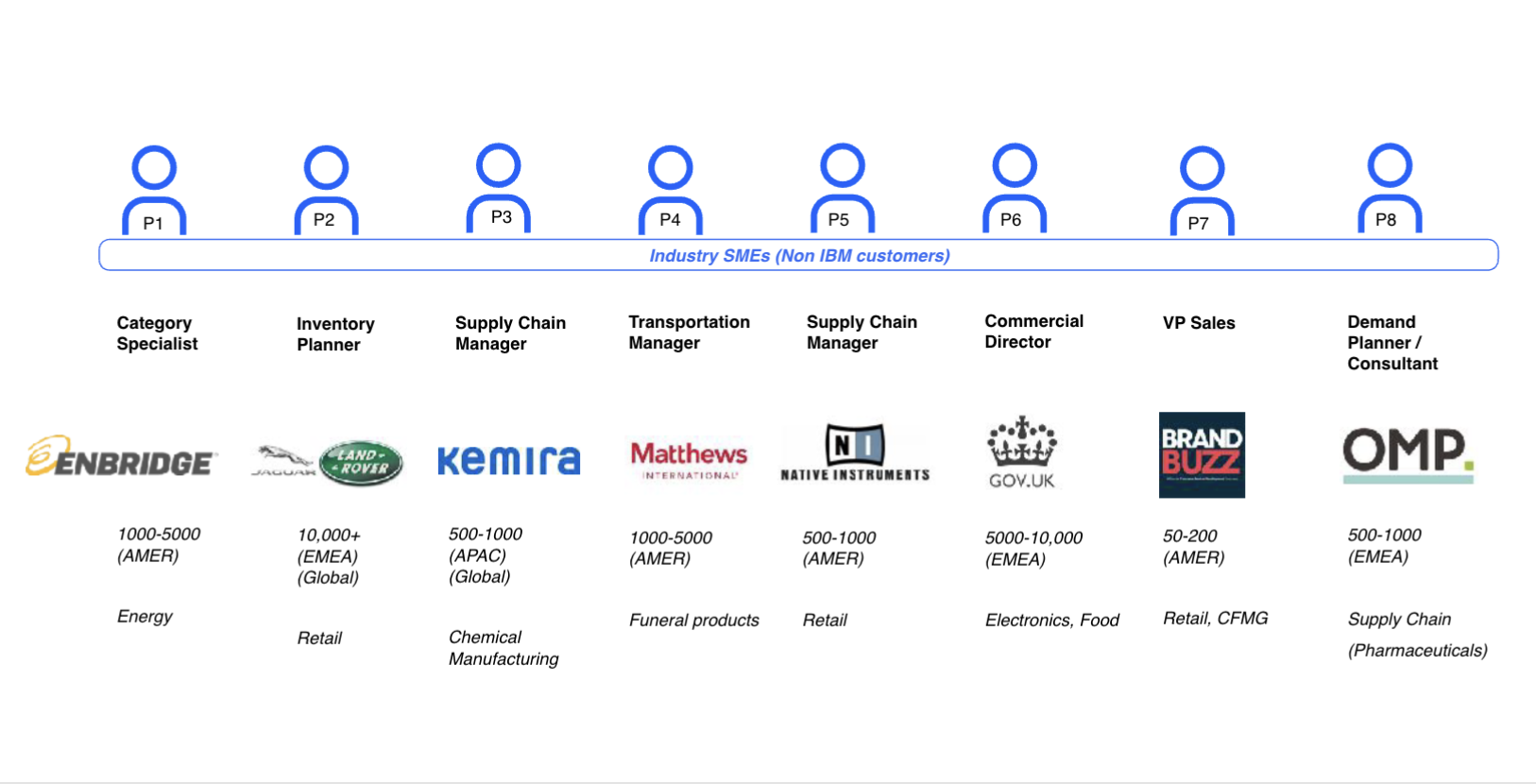
We conducted eight 1‑hour qualitative interviews to deeply understand how inventory planners & managers interpret shortages, prioritise actions, and make trade‑offs across products and accounts—insights that require rich, contextual dialogue rather than surface‑level survey data. Using a screened panel from Respondent ensured I reached participants with real operational experience.
Recruitment Criteria
Managing inventory fulfilment as a core part of their day to day responsibilities
At least 'somewhat familiar' with segmenting inventory based on customer accounts, historical order data, or business profiles
Deals with situations where demand exceeds supply, requiring inventory reallocation or prioritisation on a weekly-daily basis
At least 60/40 gender balance of male/female (given male dominated industry)
Balanced representation across North America, EMEA and APAC regions.
Analysis & Synthesis
Note taking for each session in Mural enabled initial analysis of themes based on raw data and key takeaways from team observations.
I used affinity mapping to identify more nuanced emerging themes and patterns, which highlighted a key connection:
The need to keep inventory lean and avoid costs of high inventory levels is the driving factor for Inventory Planners' mental model of using live demand vs set 'segmentation rules' to make allocation decisions.
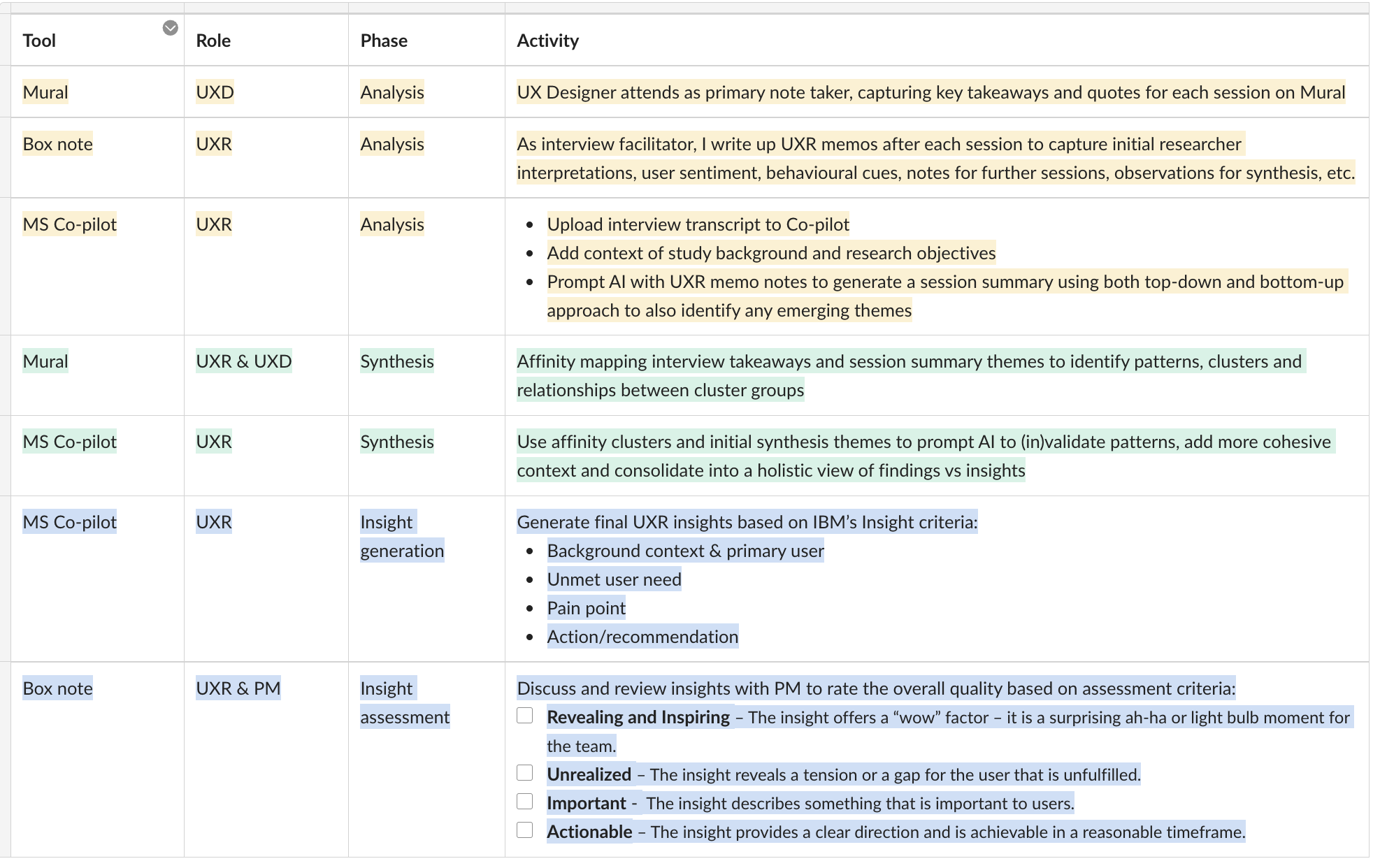
Synthesis plan, using AI
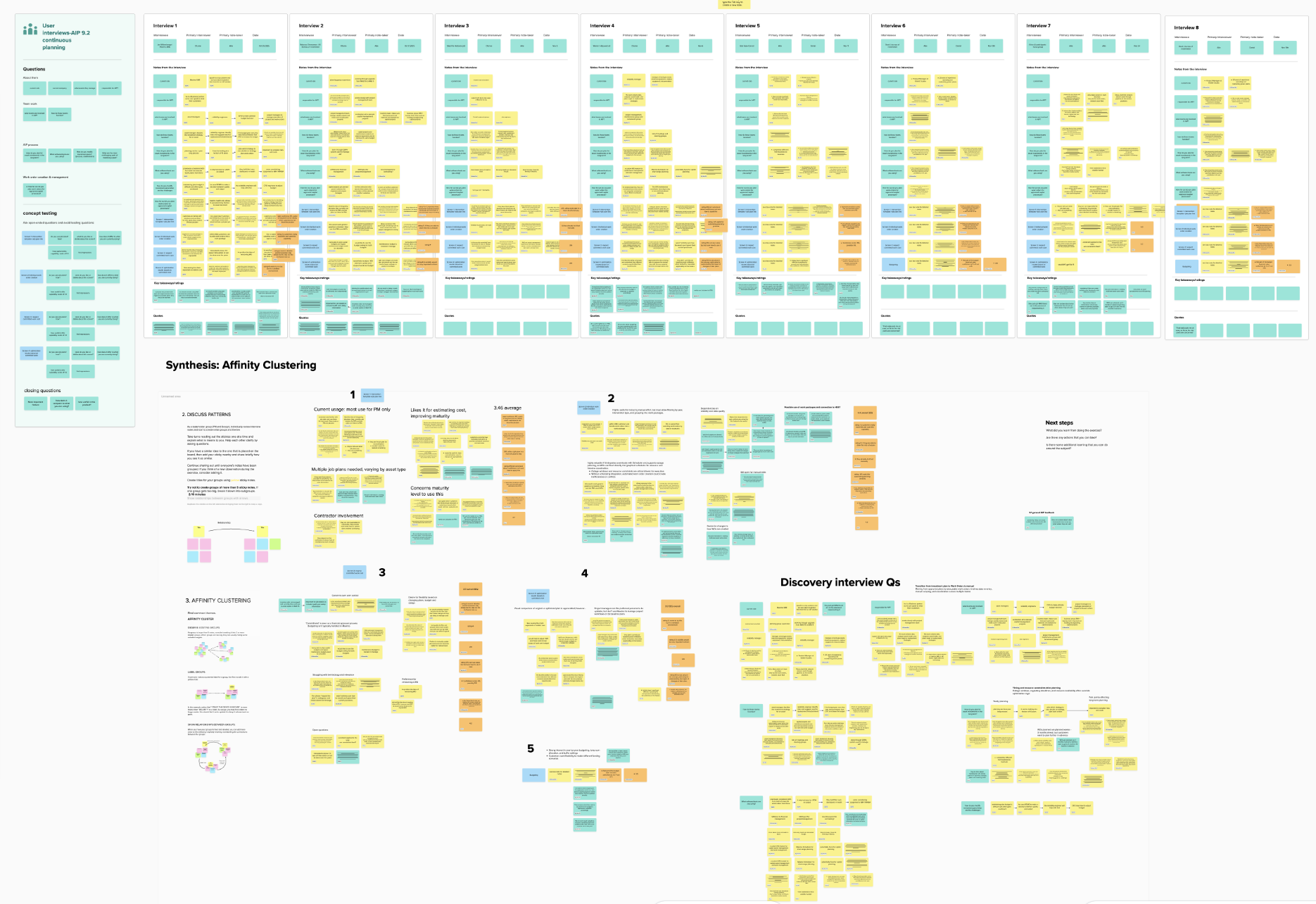
Affinity mapping
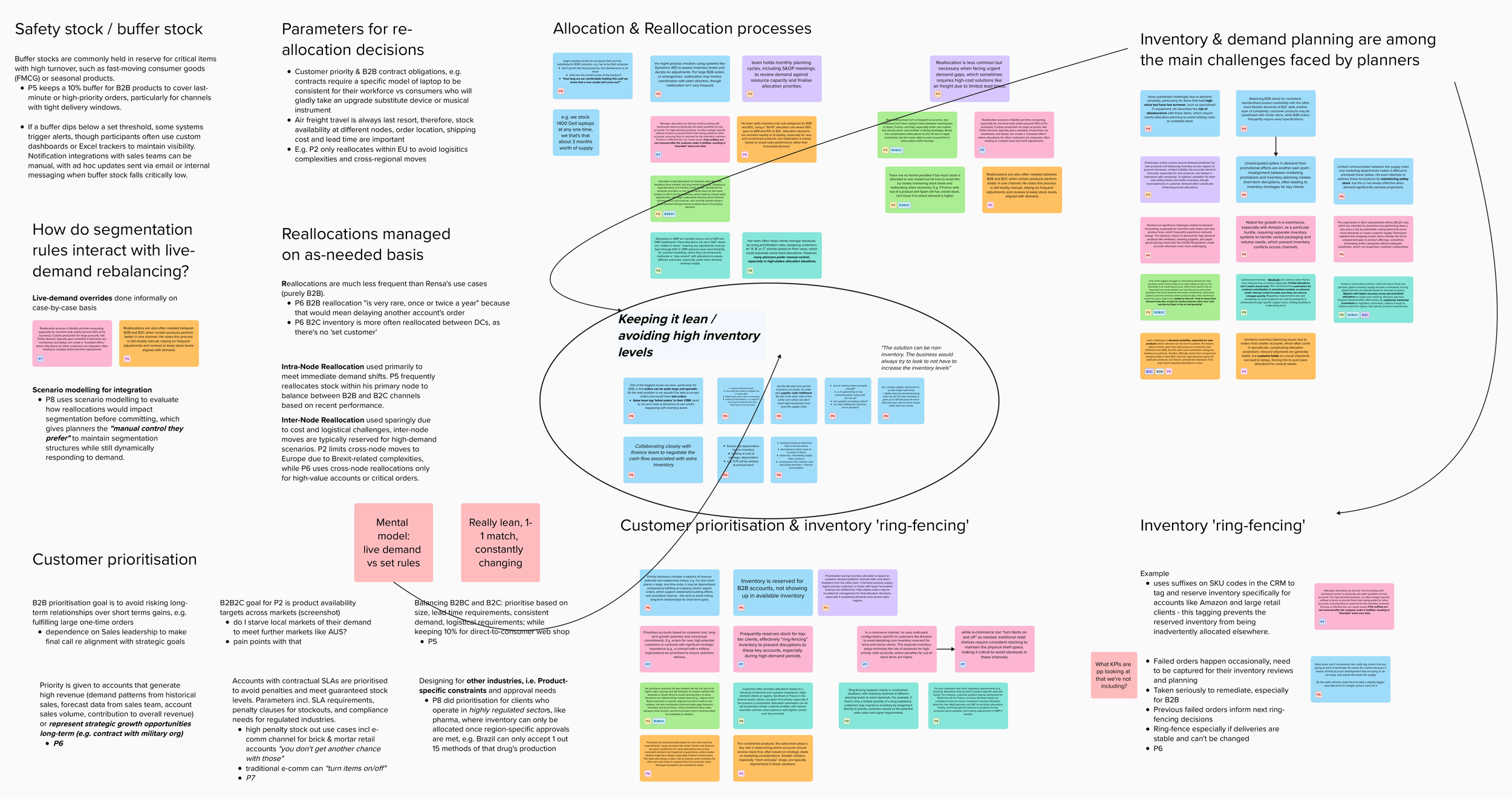
Thematic analysis & synthesis
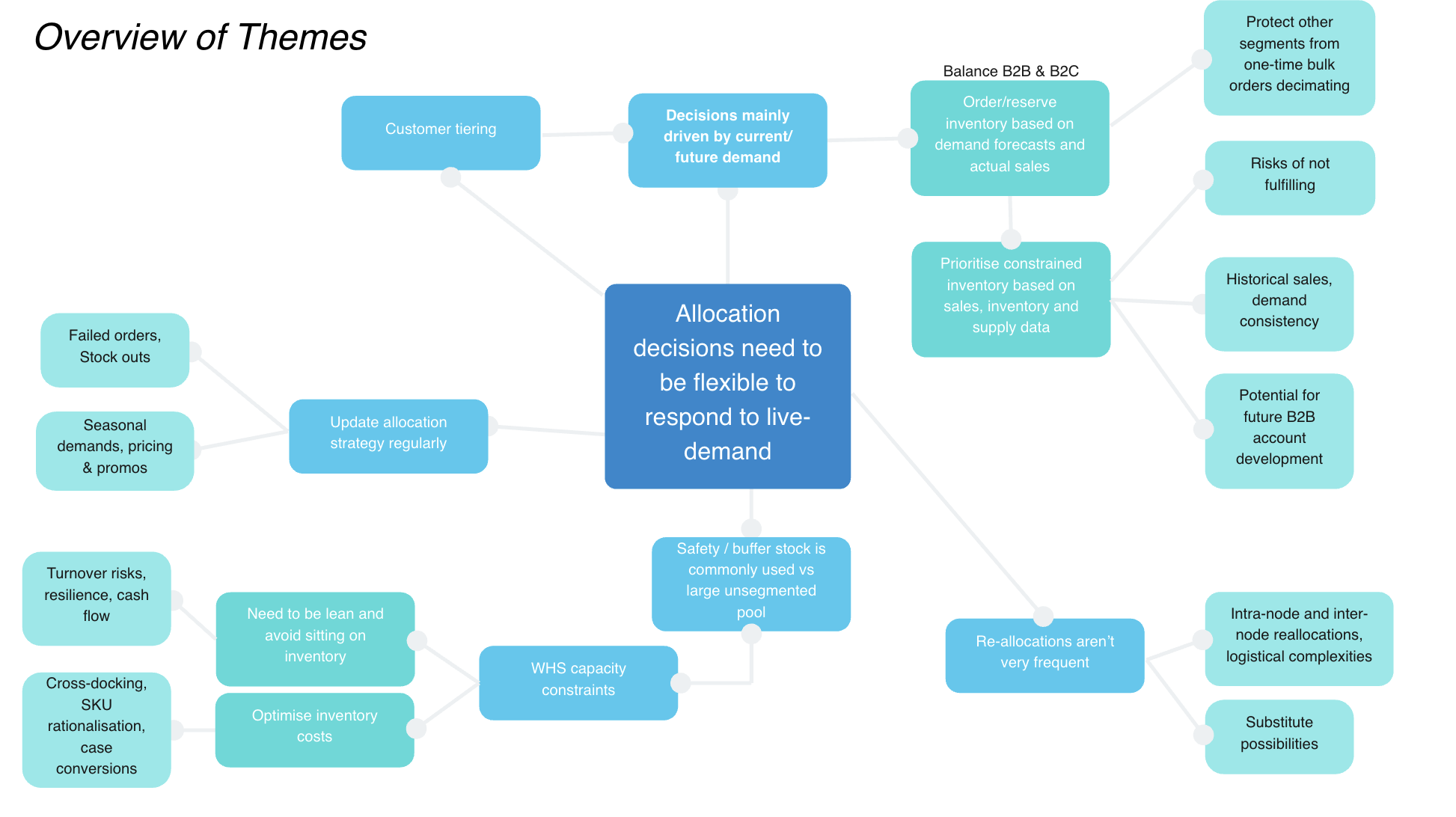
Hierarchy of Themes
Next, I conducted thematic abstraction, iteratively collapsing related clusters into higher-order themes. This step focused on identifying why patterns existed (e.g. reliance on buffer stock, infrequent reallocations) rather than just what was happening. Themes were stress-tested against multiple participants and contexts to ensure they reflected systemic behaviours rather than isolated edge cases.
To form a hierarchy, themes were then organised by dependency relationships. Foundational drivers (e.g. demand forecasting, customer tiering, warehouse constraints) were positioned upstream, while downstream consequences (e.g. stock-outs, revenue risk, protection of B2B segments) were mapped as outcomes. This helped distinguish drivers from symptoms and clarify where intervention would be most impactful.
Research Playback
Executive Summary
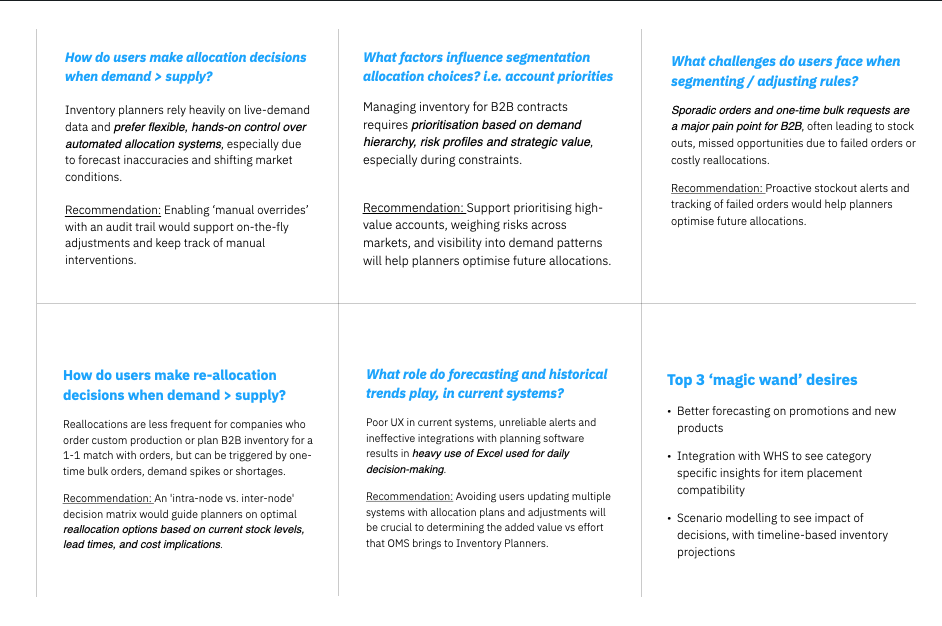
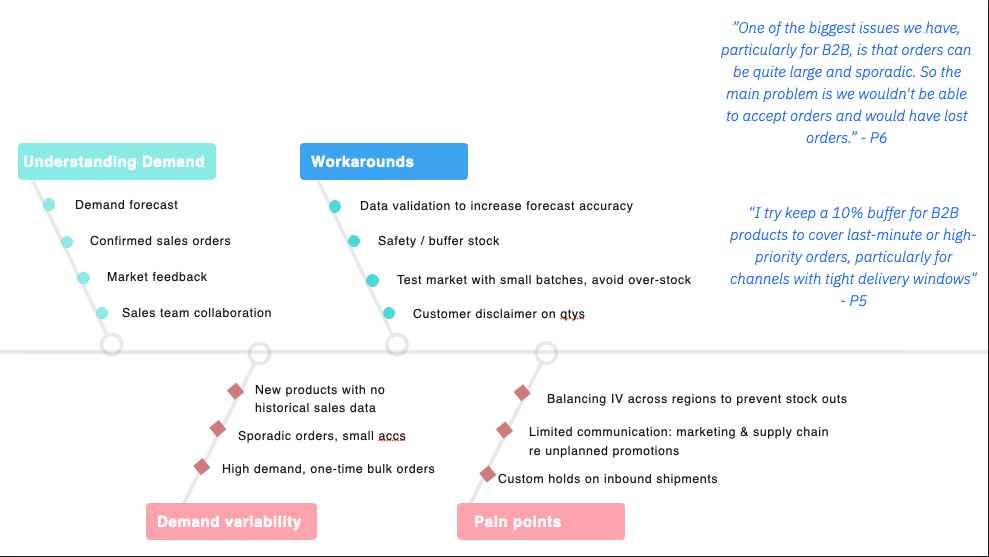
#1 Assumption Challenged:
‘The Fulfilment Manager needs segment plan insights and inventory search in order to make accurate allocation plans’
What the research revealed instead:
Inventory planners rely heavily on demand data for allocation decisions, with high levels of demand variability and forecast inaccuracy requiring high-touch allocation flexibility
Design impact:
Users value flexibility and control more than polished automation.
#2 Assumption Challenged:
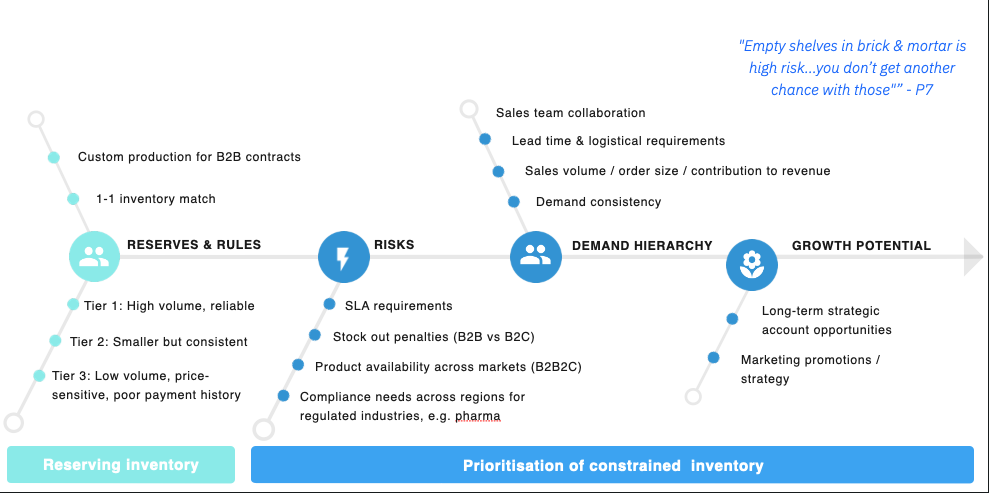
‘Teams start by bucket-ing inventory into segmented and unsegmented pools’
What the research revealed instead:
Managing inventory across B2B, B2B2C and/or B2C requires prioritisation based on demand hierarchy, risk profiles and strategic value, especially during constraints
Design impact:
Segmentation is iterative and situational, not a clean first step.
Research Question answered:
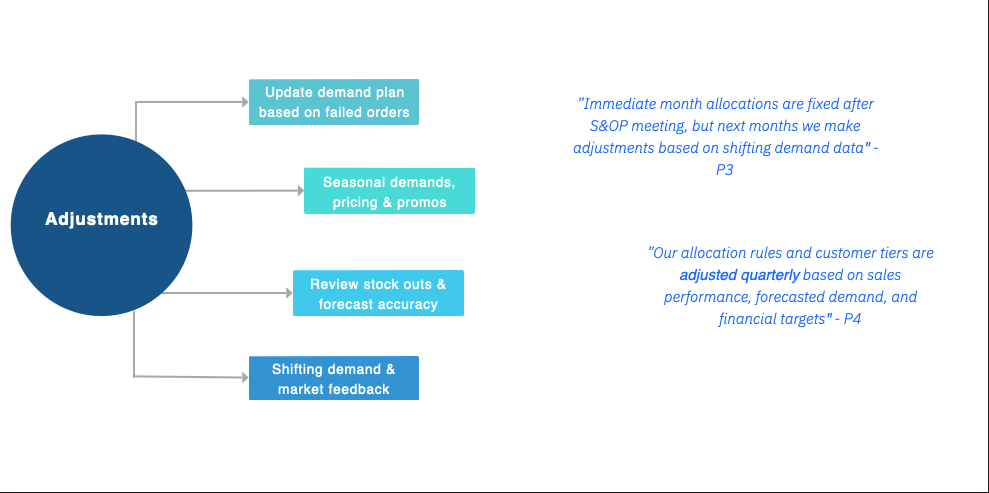
‘What challenges do users face when adjusting allocation rules?’
Adjustments to allocations occur regularly to respond to shifting demands, therefore, quick manual overrides are important to address last-minute demand changes and forecast inaccuracies
Design impact: Reallocations are reactive but critical, especially under constraint
Research Question answered:
‘What role do forecasting and historical trends play, in current systems?
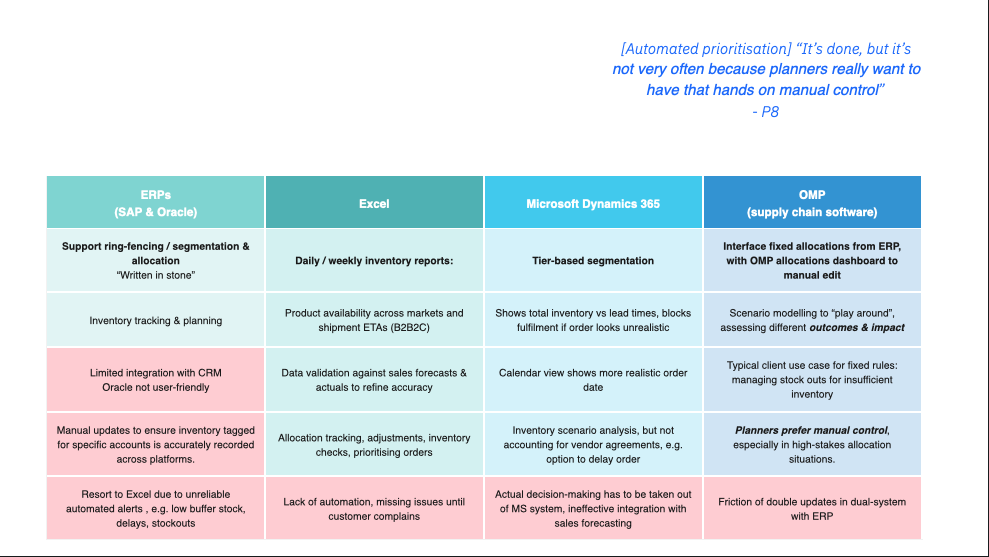
Poor UX, unreliable alerts and ineffective integrations with planning software results in heavy use of Excel used for daily decision-making
Design impact: Avoiding updates across multiple systems is crucial to added user value
Persona Development
#3 Assumption Challenged:
‘The Fulfilment Manager is the primary persona doing segmentation, allocation, and rule updates.’
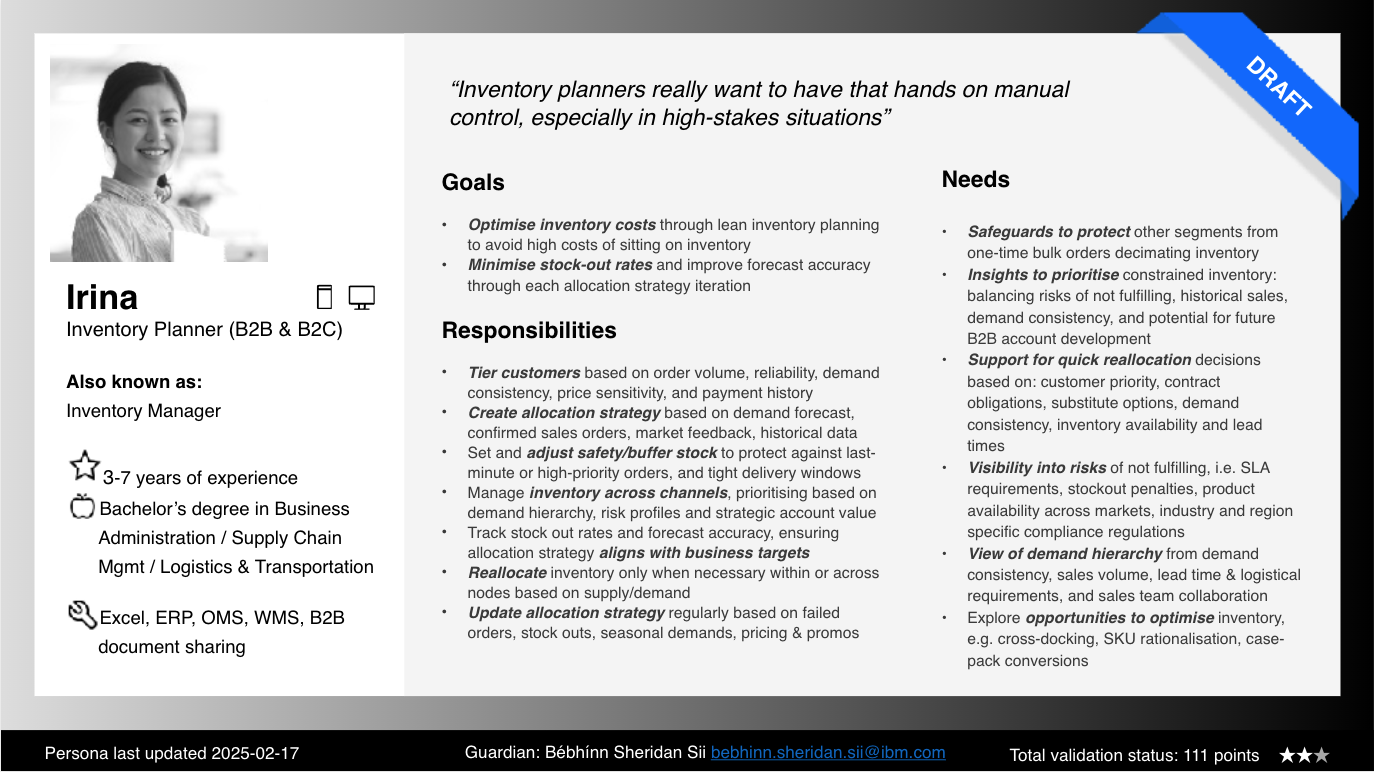
What the research revealed instead:
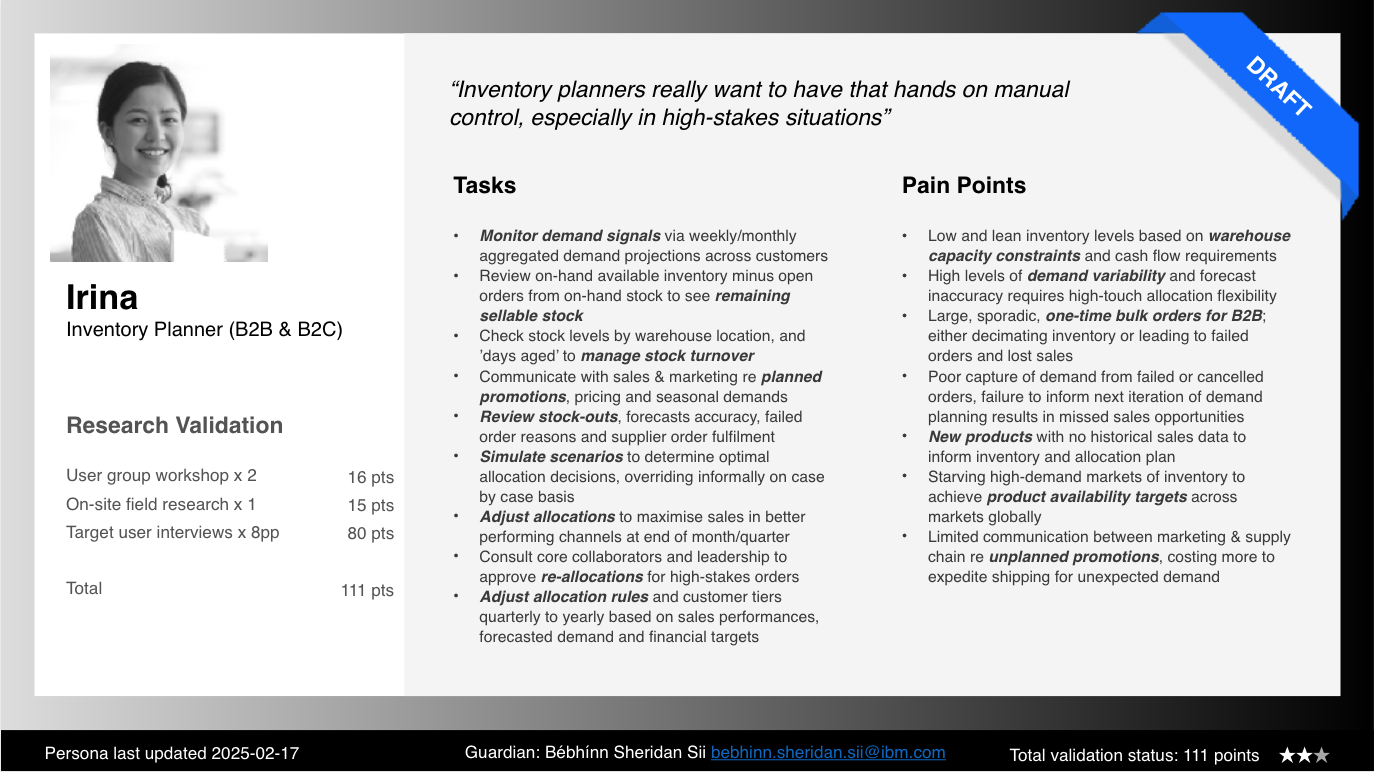
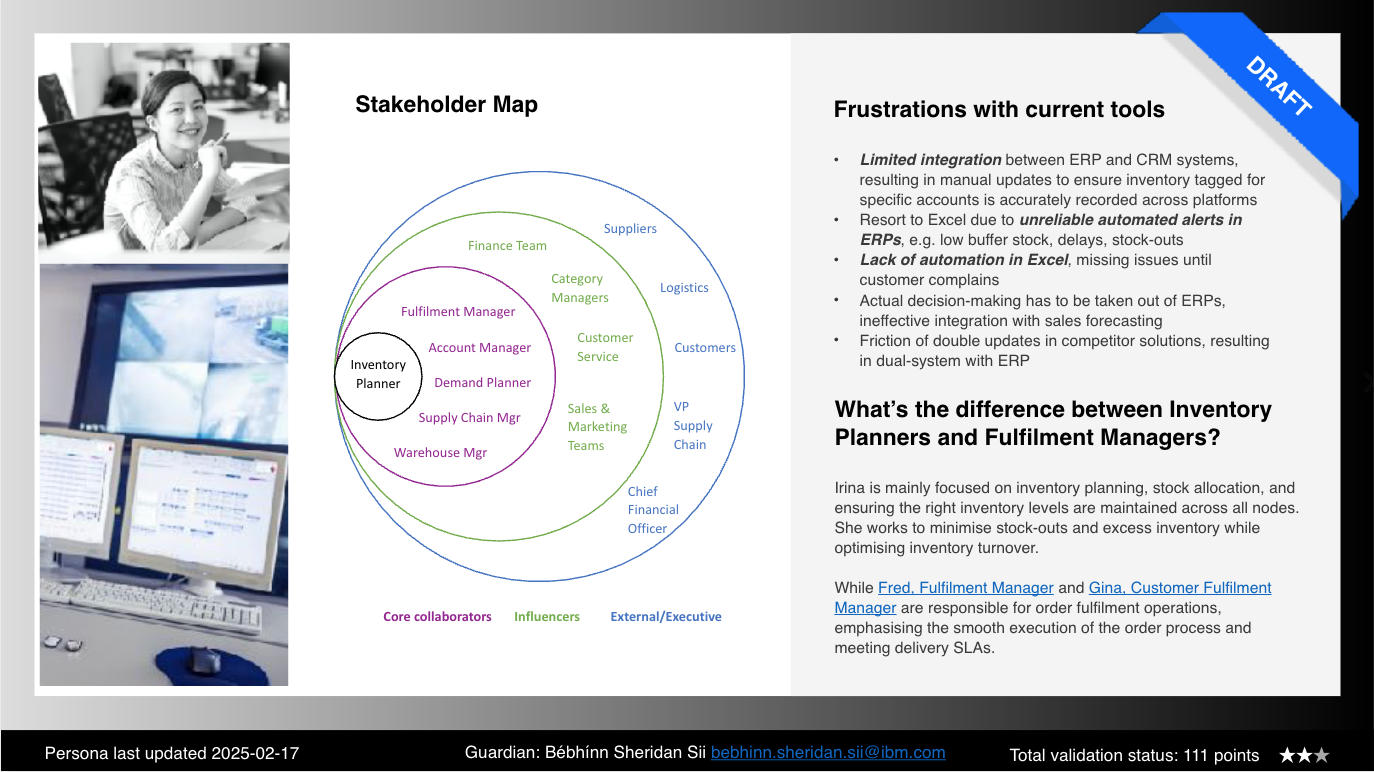
Allocation decisions are mainly owned by Inventory Planners, but are distributed across roles, not owned by a single Fulfilment Manager.
Inventory Planners often execute or override decisions rather than define the strategy alone.
Why this mattered:
Designing for one “primary” persona would have oversimplified a collaborative, high-stakes decision system.
It shifted the product focus from 'one user’s workflow' to shared visibility, auditability, and handoffs.
Pivoting Product Direction
What did this research achieve? It reframed segmentation as a collaborative, living decision process, not a one-time setup task. This opened space for discussing opportunities around:
allocation and reallocations
scenario comparison
exception handling
The real problem wasn’t “lack of insight” (as originally proposed) — it was lack of trust in forecast accuracy, adaptability under supply and warehouse constraints, and transparency into demand signals. This challenged the idea that better dashboards alone would solve allocation accuracy.
As a result of these findings, the team did not go ahead developing a solution concept based on the product manager’s original epic requirements
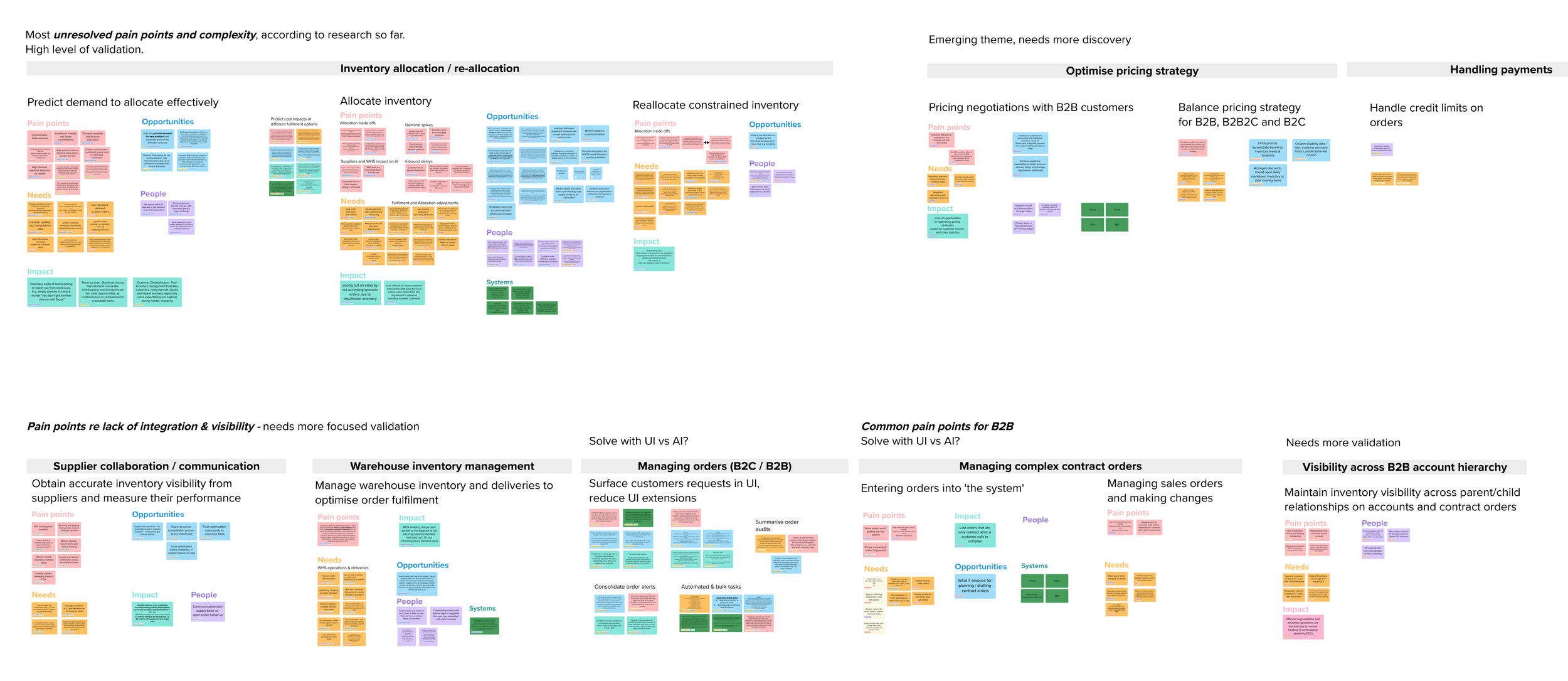
Meta-synthesis
Instead, the team agreed to synthesise and collate these insights along with other insights from research and customer engagements; ultimately pivoting direction to prioritise re-allocations and exception handling for B2B use cases, as the research highlighted a stronger pain point and unmet need in this area.
Project Outcome
Evidence-based AI Use Cases
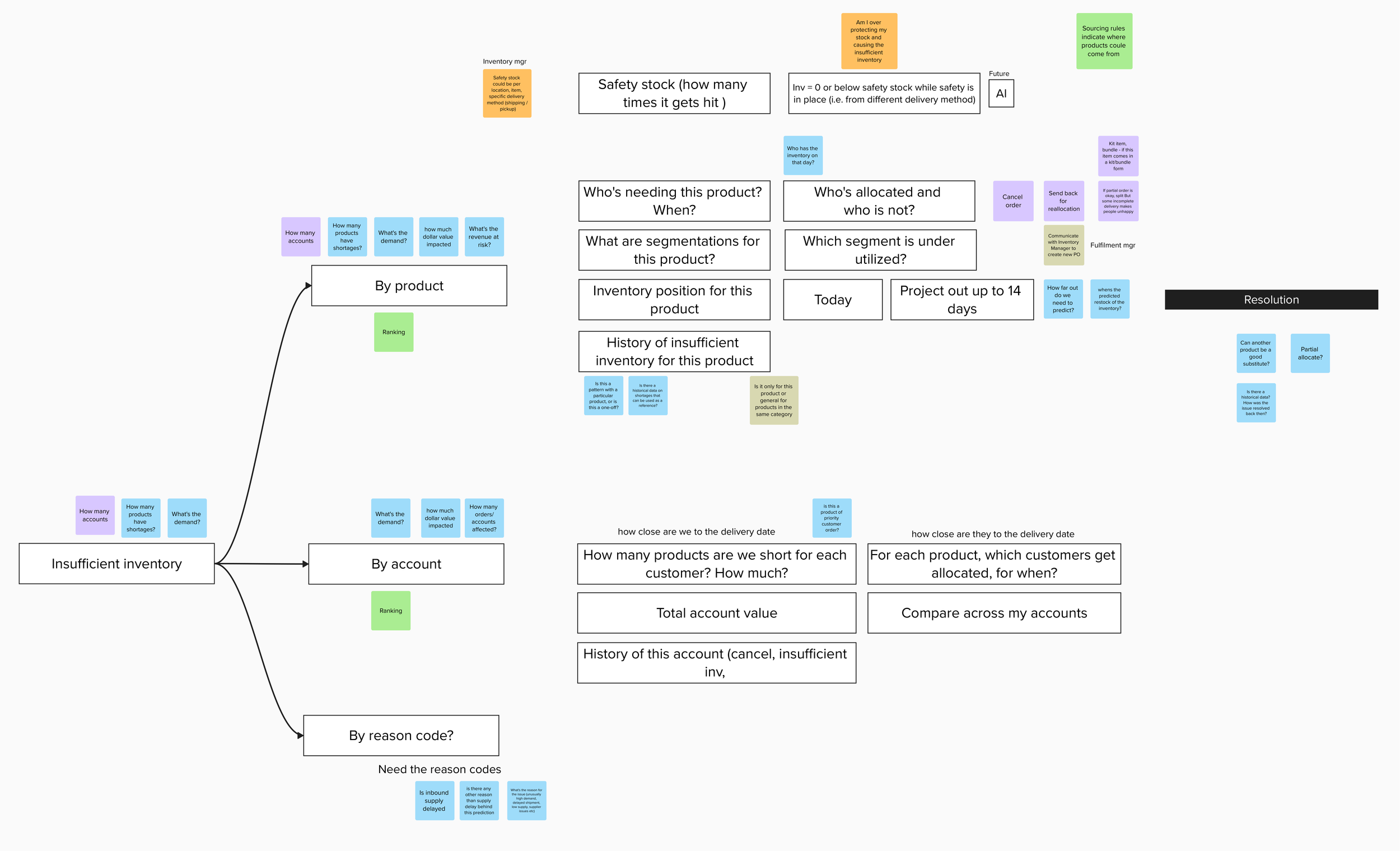
The inventory segmentation & allocation insights showed that shortages and fulfilment issues vary significantly by product, account, and reason code, each signalling different levels of urgency and business impact.
Through twice-weekly working sessions with our 3-in-a-box team, these distinctions helped to shape the design of an AI inventory agent to think the way Inventory Planners do—recognising why inventory is insufficient, who is affected, and what action should come first.
Instead of generic alerts, the agent would instead prioritise high‑value accounts, identifies systemic vs. isolated issues, recommends reallocation or replenishment options, and explains its reasoning. This ensures the AI behaves like a proactive partner rather than a passive notifier, guiding users toward smarter, more context‑aware inventory decisions.